





Customer feedback plays a vital role in helping businesses understand customer expectations, improve service quality, and strengthen customer satisfaction. However, collecting feedback through traditional methods can often be time-consuming and inefficient. Paper forms, suggestion boxes, and manual surveys may result in lower participation rates and delayed responses, making it difficult for businesses to act on customer insights in a timely manner.
Digital solutions have transformed the way organizations gather and analyze customer opinions. Among these solutions, QR code feedback systems offer a fast and convenient way for customers to share their experiences. By simply scanning a QR code with a smartphone, customers can access a digital feedback form and submit their comments within seconds.
This streamlined process helps businesses collect valuable insights more efficiently while creating a more convenient experience for customers.
What Is a QR Code Feedback System?
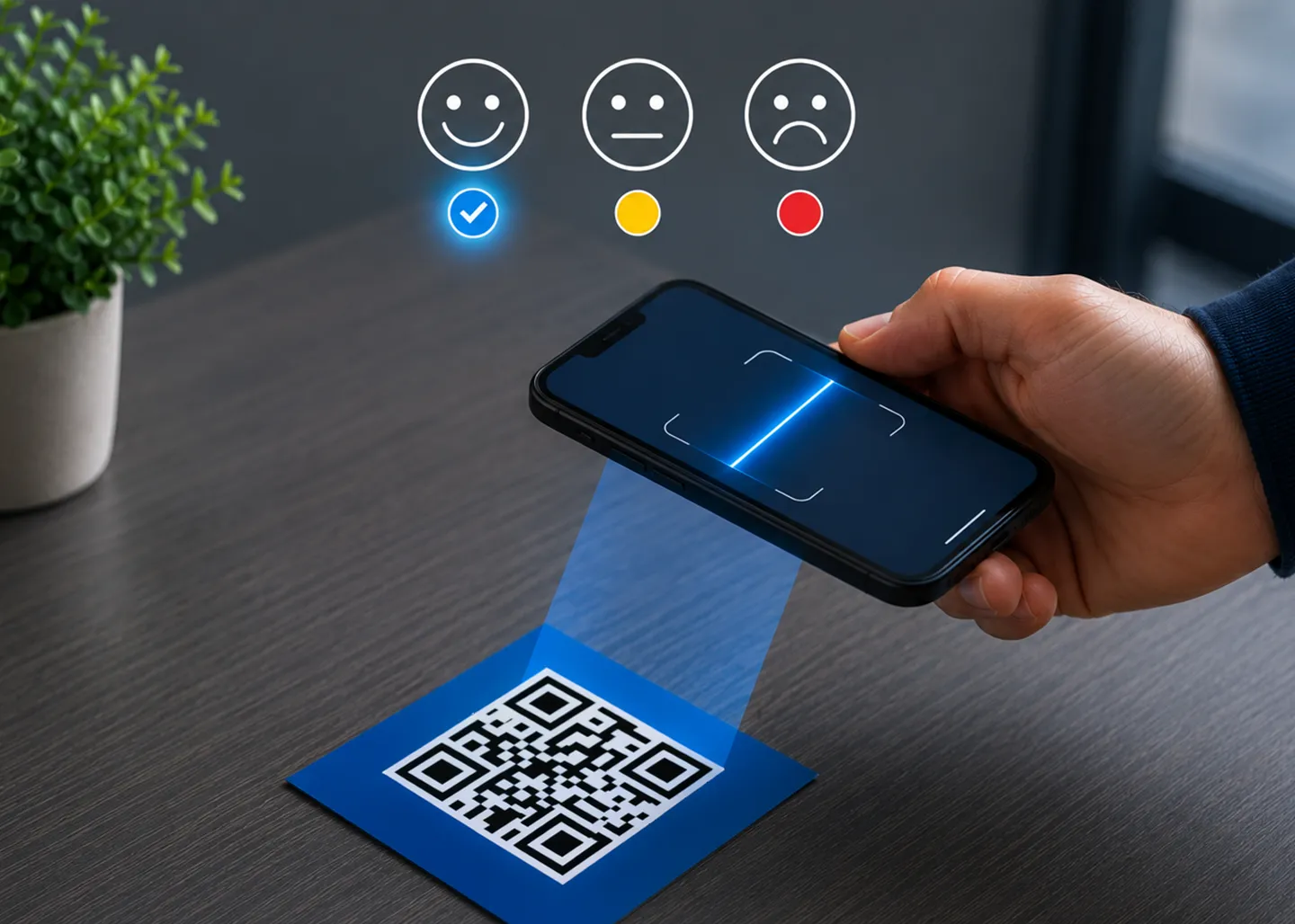
A feedback QR code system is a digital solution that allows customers to access a feedback form by scanning a QR code using their mobile devices.
Instead of filling out paper forms or navigating lengthy survey processes, customers can quickly share their opinions through a mobile-friendly interface. The feedback submitted through the system is collected digitally, making it easier for businesses to review, organize, and analyze customer responses.
A customer feedback QR code can be placed in various customer touchpoints, including restaurants, retail stores, hotels, healthcare facilities, service centers, and event venues. This flexibility allows businesses to gather feedback at the moment of interaction, when customer impressions are still fresh.
By simplifying the feedback process, organizations can encourage higher participation rates and gain a clearer understanding of customer experiences.
Smart QR Feedback System Workflow
The Smart QR feedback process is designed to make feedback collection simple for both customers and businesses.
The workflow typically includes the following steps:
- A business generates and displays a QR code at a customer touchpoint.
- A customer scans the QR code using a smartphone.
- The customer is directed to a digital feedback form.
- Feedback, ratings, or comments are submitted through the form.
- Responses are stored and made available through a centralized dashboard.
- Managers can review feedback and identify areas for improvement.
Because the entire process is digital, businesses can access customer insights much faster than with traditional feedback collection methods.
In addition, a QR code for feedback enables organizations to reduce manual data collection efforts while maintaining a more organized feedback management process.
Advantages of Using QR Code Feedback for Businesses
Customer expectations continue to evolve, making it increasingly important for businesses to understand customer experiences and respond to feedback quickly. Digital feedback solutions provide organizations with a practical way to collect, review, and act on customer insights while reducing the limitations associated with traditional methods.
A qr code for customer feedback can help businesses gather responses at the point of service, increasing the likelihood that customers will share their opinions while their experience is still fresh. This can result in more relevant and actionable feedback.
Some of the key advantages include:
- Faster feedback collection processes
- Improved customer participation rates
- Reduced reliance on paper-based forms
- More organized feedback management
- Easier access to customer insights
- Centralized data storage and reporting
- Better visibility into customer satisfaction trends
- Faster identification of service improvement opportunities
- Enhanced decision-making through real-time information
- Greater operational efficiency
Another important benefit is the ability to monitor customer sentiment continuously. Rather than waiting for periodic surveys or manually reviewing suggestion forms, businesses can access feedback as it is submitted and respond more proactively to customer needs.
The digital nature of a qr feedback solution also helps organizations maintain more accurate records and simplify reporting processes. By consolidating feedback in a centralized platform, businesses can identify recurring trends, compare results across locations, and support ongoing service improvement initiatives.
Why Choose Smart QR Instead of Traditional Feedback Boxes?
Traditional feedback boxes have long been used as a method for collecting customer opinions. However, they often require customers to spend additional time completing paper forms, and businesses may need significant administrative effort to review and process the collected information.
Smart QR solutions offer a more efficient alternative by digitizing the entire feedback process. Customers can provide comments, ratings, or suggestions directly through their smartphones without requiring paper forms or manual submission procedures.
Because responses are collected digitally, businesses can review feedback much more quickly and gain access to actionable insights without delays. This allows organizations to address concerns, identify service gaps, and evaluate customer satisfaction levels more effectively.
Another advantage is accessibility. A customer feedback QR code can be placed at multiple customer touchpoints, making it easier for customers to share their experiences whenever they choose. The simplicity of scanning a code and submitting feedback in just a few steps can encourage higher participation compared to traditional feedback methods.
As customer experience becomes an increasingly important business priority, organizations are looking for solutions that provide both convenience and actionable data. Smart QR systems help bridge this gap by creating a faster, more accessible, and more scalable approach to feedback collection.
By combining ease of use, real-time data collection, and centralized reporting capabilities, Smart QR solutions provide businesses with a modern framework for understanding customer expectations and continuously improving service quality.