





Smarter Inventory, Lower Costs
Wisera’s asset and inventory management solution, Wisera Asset Management Module, conducts inventory audits, reconciles them with financial records, and ensures fast and secure management of all asset data.

Wisera Asset Management Module: Centralized Asset & Inventory Management
Wisera Asset Management Module eliminates data errors, losses, and unnecessary costs caused by manual tracking processes, enabling centralized management of asset movements, inventory status, and maintenance workflows — all from a single platform.


Track, Analyze, Optimize — All in One Platform
Wisera Asset Management Module provides comprehensive inventory management by recording all asset movements from initial purchase to end-of-life. Digital inventory audits conducted using barcode and RFID technologies minimize manual errors and enable businesses to track their assets quickly and accurately.
The platform helps organizations gain deeper insights into their asset data, improves overall management, and reduces operational costs — contributing to greater competitiveness.
Smarter Asset Management Starts with Wisera Asset Management Module
- Tracks asset check-in/check-out movements digitally to prevent losses and inventory discrepancies.
- Extends equipment lifespan and prevents unexpected failures through scheduled maintenance plans.
- Saves time and reduces costs by managing all processes through a centralized system.
- Enables fast and accurate inventory management with barcode and RFID technologies.
- Facilitates asset assignment and tracking by linking inventory to specific users.

Prevent Waste, Gain Insight with Smart Stock Tracking
Reduce losses with digital warehouse control.
Error-Free Inventory Tracking
Thanks to barcode and RFID technologies, the movement of all consumables — from items like tea and coffee to cables and accessories used by technical teams — can be monitored digitally. The system enables detailed reporting of which department used which materials, when, and how much. This visibility helps identify usage patterns, detect shortages early, and prevent unnecessary consumption.
Centralized Control for Internal Logistics
The preparation and distribution of requested materials to relevant departments are managed through a single, unified system. For example, the amount of cable used during an air conditioner repair or the weekly consumption of tea and coffee can be recorded within the platform. This ensures full control over material flow, enables more accurate planning of needs, and minimizes disruptions in internal operations.

Data-Driven Material Management for Smarter Operations
By analyzing where frequently used materials are most heavily consumed, supply requests can be managed more strategically. Tracking the tools and equipment required by technical teams becomes easier, enabling more efficient work planning. The system reports material usage trends for each department, providing valuable insights to managers. This approach not only saves time but also reduces material waste.
Contract Management
Never Miss a Deadline — Minimize Risk.
Secure, Searchable, Centralized
With automatic archiving and search engine–powered access, you can locate any contract in seconds. Authorized user access ensures full control over who can view or modify each document, reducing risks and improving accountability.

Never Miss a Deadline. Never Risk a Deal.
The system helps companies maintain contract continuity and minimize commercial risks. With automated renewal workflows, contracts are updated based on predefined criteria, eliminating errors caused by manual processes. Digital solutions ensure that no critical dates are overlooked, enabling businesses to manage operations more securely and with greater confidence.
Controlled Access. Complete Traceability.
Digital contract management solutions define authorization levels, allowing companies to control access rights and ensure that only relevant departments can view specific agreements. By managing contract processes more securely and transparently, organizations can strengthen data protection. To ensure legal compliance, automated version tracking records every change made, enabling full visibility into historical updates and revisions.


Track Asset Responsibility with Confidence
Reliable Tracking in Asset Responsibility.
User-Based Authorization
Wisera’s assignment management solution clearly defines responsibility for each asset, helping prevent losses. With user-based authorization and monitoring systems, it tracks which device is assigned to whom, for how long, and when it is due for return.
Control, Track, Approve — All in One Place
With support for RFID, barcodes, and QR codes, the location of all equipment, who is using it, and when it is due for return can be tracked via Wisera. Real-time reporting allows managers to instantly view the status of all assigned assets and manage the process through automated alerts when needed. Wisera minimizes risks related to lost or untraceable equipment and brings greater control to asset-related workflows.
Secure Approval Mechanism
For sensitive or high-value equipment, it’s essential to log who received the asset, when, and under what conditions it was used. Wisera’s digital assignment management solutions ensure a safe and organized process through approval mechanisms, giving businesses better control over their assets. Return dates are tracked within the system, with automated reminders to ensure timely returns and full process transparency.
Planned Maintenance
Planned Maintenance Management
Standard Operating Procedures
Visibility and Reporting
Equipment maintenance history and current status can be monitored from a single dashboard. At-risk assets are easily identified, and detailed reports enable performance tracking and more informed decision-making.
Field Tracking and Audit
Completed maintenance activities are recorded with location and time data. Digital evidence ensures verification, making field operations fully traceable and auditable.

Asset Management Software FAQs
What is asset management software and how does it work?
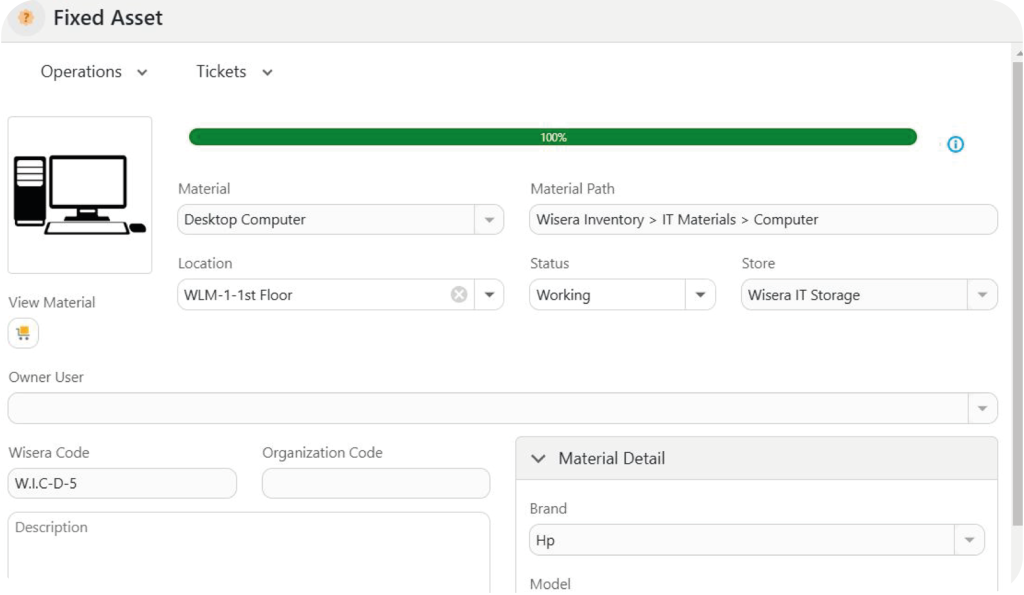
Asset management software is a comprehensive solution that enables a business to manage the life cycle of all its physical and digital assets through a single platform. Fixed assets, equipment, devices, consumables, and other inventory items are registered in the system, while their locations and usage status are updated in real time. This keeps critical information such as who holds each asset, how long it has been used, its maintenance needs, and its remaining useful life accurately recorded.
Which assets can be tracked with an asset tracking program?
Fixed asset tracking software can monitor all physical assets, from furniture and IT equipment to machinery, devices, vehicles, and consumables. The location, responsible person, and current status of each asset are kept up to date.
How does asset tracking with QR codes work?
A unique QR code label is assigned to each asset. When the code is scanned, all information about the asset, including its history and assignment status, can be viewed instantly. This method speeds up inventory counts and provides field teams with immediate access to asset information.
Which asset management processes does EAM software support?
EAM (Enterprise Asset Management) software supports asset registration, assignment and return, warehouse and inventory tracking, planned maintenance, and asset life cycle management from end to end. This enables organizations to manage asset costs and performance throughout the entire life cycle from a single system.
How does asset management software support asset assignment and return processes?
The asset assignment process begins when an asset is allocated to a specific employee or team. The asset is matched with the user’s information, recorded through user-based authorization and approval mechanisms, and digitally assigned. When the recipient accepts the asset, the transaction is archived with a timestamp. Returns, replacements, and maintenance processes are managed through the same platform, and the asset’s status is updated when it is returned. This makes assignment and return processes traceable without manual forms, reduces the risk of loss, and creates a complete historical movement record for each asset.
How does asset management software simplify warehouse and consumable inventory tracking?
The warehouse management module records consumables and equipment by stock quantity or individual unit. Consumption movements, stock levels, and usage histories can then be reported automatically. The system records when, where, and by whom each item was used, while critical stock alerts help identify shortages early and simplify procurement planning. This provides clearer visibility into consumption rates, minimum stock levels, cost distribution, and purchasing requirements.
How does asset management software support maintenance and asset lifecycle management?
The planned maintenance module schedules regular asset maintenance using standard work instructions and maintenance calendars, while maintenance history and current status can be monitored from a single screen. This helps reduce failures, extend asset life, and maintain performance throughout the asset’s life cycle.