







Scope and Processes of Facility Management Services
Facility management involves more than maintaining the day-to-day functionality of a building. It includes planning operational activities, assigning tasks to the relevant teams, monitoring maintenance requirements, conducting field inspections, and reporting on completed and ongoing work.
The scope of facility management services may vary depending on the size, purpose, and operational structure of a facility. Common processes include:
• Recording requests, issues, and maintenance needs,
• Creating and managing work orders,
• Assigning tasks to relevant employees or teams,
• Monitoring planned and unplanned maintenance activities,
• Managing field operations and inspections,
• Tracking workforce-related processes,
• Managing inventory records,
• Monitoring operational performance and generating reports.
In building and facility management, these processes often involve different teams, responsibilities, and sources of information. Managing them separately can make it difficult to maintain visibility across operations, particularly for organizations with multiple locations. A centralized facility management system brings operational data and workflows together, making processes easier to coordinate and monitor.
What Is Facility Management Software and What Does It Do?
Facility management software is a digital solution designed to help organizations plan, record, monitor, and report on facility-related operations. It provides a central environment where managers and teams can access information about tasks, requests, maintenance activities, and other operational processes.
For example, when an issue occurs at a facility, it can be recorded as a request within the system. The request can then be converted into a work order, assigned to the relevant employee or team, and monitored until completion. This creates a digital record showing when the request was received, who was assigned to it, and how the process progressed.
A facility management platform also makes historical operational data accessible for future evaluation. Managers can review previous activities, monitor ongoing tasks, and use reports to gain greater visibility into facility operations. For organizations managing buildings and multiple operational areas, building facility management software can therefore provide a centralized structure for coordinating day-to-day workflows.


Key Features of Facility Management Software
The functions of facility management software solutions are designed to bring different operational activities into a common digital environment. Features may vary between platforms, but commonly include request and work order management, maintenance tracking, task assignment, field inspections, inventory management, workforce management, and reporting.
Maintenance-related features can be used to plan and monitor recurring activities for equipment or facility areas. When an unexpected issue occurs, requests and work orders can be assigned to the appropriate team and tracked throughout the process.
A facility management system software can also provide managers with visibility into operational activity across the organization. Rather than viewing only completed tasks, they can monitor open requests, ongoing work orders, and field activities. Maintaining digital records also makes it possible to review previous operations and evaluate processes using historical data.
For organizations responsible for building facility management, this centralized approach can reduce the need to track tasks and operational information through disconnected communication channels or separate files.
Digital Management of Facility and Operational Processes
Facility operations may involve numerous teams, tasks, assets, and locations at the same time. When information is distributed across phone calls, messages, emails, spreadsheets, or separate systems, maintaining an up-to-date view of operations can become increasingly difficult.
Digital facility management solutions bring these workflows into a shared environment. From the moment a request is submitted to the completion of the corresponding task, each stage can be recorded and monitored digitally. Managers can view the current status of operations, while employees can access the tasks and work orders assigned to them.
Digital management becomes particularly valuable for organizations operating across multiple locations. Buildings, branches, stores, offices, or other facilities can be monitored through a central platform instead of relying on separate processes for each location. This helps organizations establish a consistent approach to operational management across their facilities.
Digital records also make operational reporting possible. Data related to requests, completed tasks, pending work, maintenance activities, and field operations can be evaluated to identify patterns and areas where processes may need improvement.
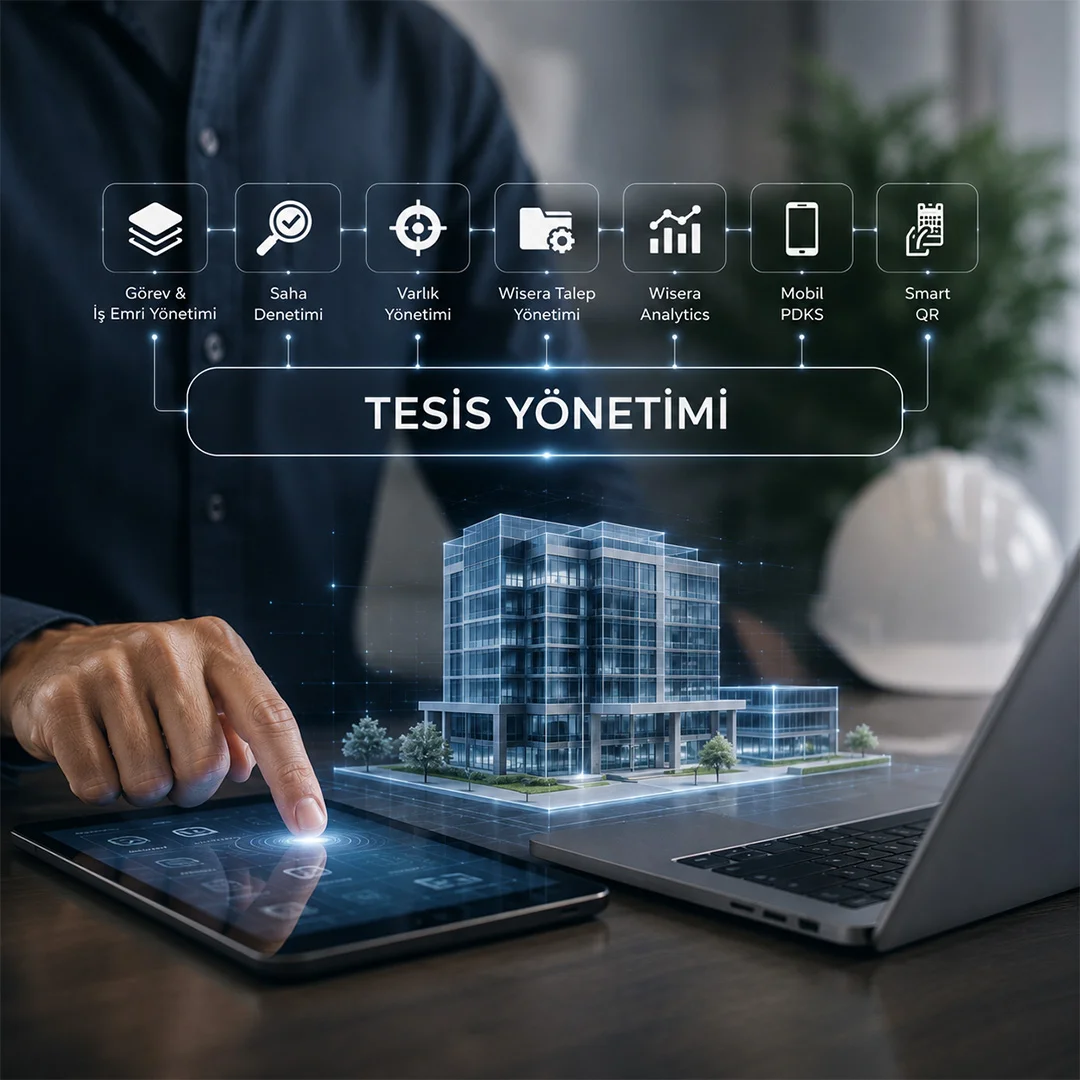

What Can You Do with Wisera Facility Management Software?
Wisera provides a centralized digital platform for managing field and office operations. By bringing operational workflows into a shared system, organizations can manage processes ranging from requests and work orders to inspections, inventory, and workforce-related activities.
With Wisera facility management software, you can:
• Record requests from field and office operations,
• Convert requests into work orders,
• Assign tasks and work orders to relevant employees or teams,
• Monitor work order status and completion processes,
• Manage field operations and inspection processes,
• Track maintenance and operational activities,
• Manage inventory information digitally,
• Monitor workforce, attendance, shift, and working-time processes,
• Access operational reports and data,
• Monitor operations across multiple locations from a centralized system.
As a facility management platform, Wisera supports organizations with both single-location and multi-location operations. Centralized access to operational information helps managers maintain visibility into field activities, monitor workflows between teams, and use recorded data when evaluating facility processes.
Frequently Asked Questions About Facility Management
What processes does facility management software cover?
Facility management software can cover processes such as request management, work orders, task assignments, maintenance and issue tracking, field operations, inspections, inventory management, workforce processes, and reporting. The exact scope depends on the capabilities of the software and the operational requirements of the organization.
Who is digital facility management suitable for?
Digital facility management is suitable for organizations that need to coordinate and monitor facility, field, and office operations from a central environment. It can be particularly useful for businesses managing multiple employees, operational tasks, facilities, or locations.
Which industries use facility management?
Facility management is used across industries such as retail, manufacturing, education, healthcare, real estate, and professional services. Offices, stores, campuses, production facilities, and other commercial properties can also use digital systems to manage their operational processes.
What are the benefits of facility management software?
Facility management software centralizes operational processes and creates digital records of facility-related activities. It enables organizations to monitor work status, assign responsibilities, retain historical records, and report on operational data. This provides managers and teams with greater visibility into ongoing and completed activities.
Can multiple facilities be managed with facility management software?
Yes. Software that supports multi-location operations can be used to manage multiple facilities through a centralized system. Requests, work orders, teams, maintenance activities, and other operational processes across different locations can therefore be monitored within the same digital environment.
How are work orders tracked in facility management solutions?
Work orders can be created within the system and assigned to the relevant employee or team. Their status can be updated as work progresses, while completed activities can be recorded digitally. Managers can therefore monitor open, ongoing, and completed work orders and maintain visibility throughout the process.