






Boost Operational Efficiency with Data Analytics
By accurately analyzing your data, you can enhance workflow efficiency and make more strategic business decisions.

Wisera Analytics: Unlock the Power of Your Data
Wisera Analytics offers tailored analytics tools and reporting solutions for businesses of all sizes. It collects and analyzes data across every area of your operations, delivering meaningful insights that empower business owners and managers to make smarter, data-driven decisions.
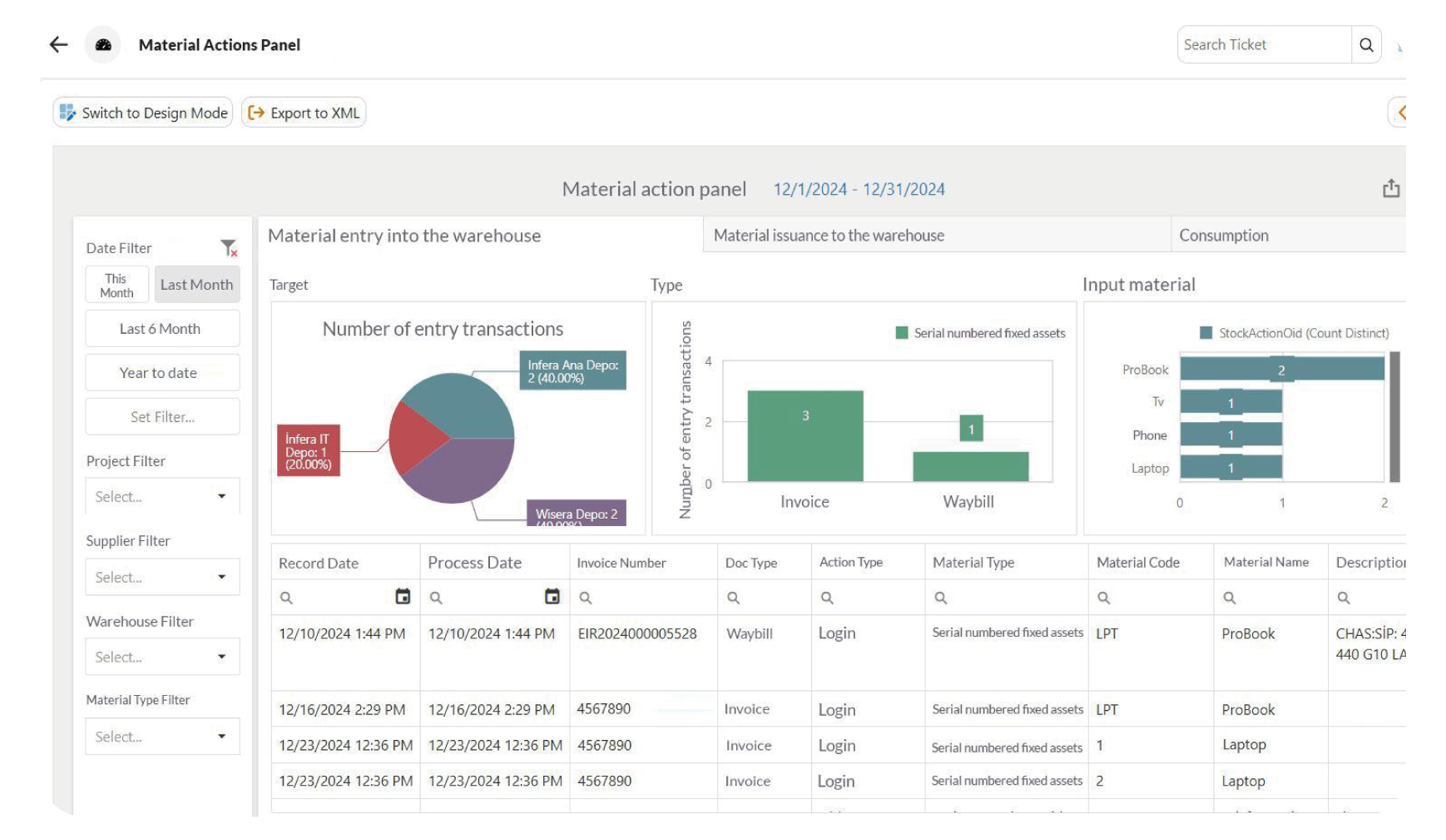

How Does Wisera Analytics Work?
Wisera Analytics provides advanced tracking features for every request, allowing real-time monitoring of all activities. Automated notifications ensure that relevant departments and employees are promptly informed about requests requiring action. Requests are consistently resolved accurately and on time, leading to increased operational efficiency and improved business performance.
What Advantages Does Wisera Analytics Offer to Businesses?
- Provides advanced reporting capabilities for tracking every stage of operations.
- Delivers timely and accurate solution suggestions to improve responsiveness.
- Quickly identifies inefficiencies and gaps within business processes.
- Enhances overall business performance by enabling data-driven decision-making.
- Consolidates, analyzes, and reports all data through a centralized platform.
- Automates workflows to save both time and costs.
- Ensures full visibility and traceability of request histories through transparent reporting.

Transform Data into Your Competitive Edge
Track all your operational processes with detailed reports and achieve more efficient management.
Keep Up with the Competition
Wisera enables businesses to monitor their operational processes digitally, providing real-time reporting and analysis capabilities. This empowers organizations to evaluate data promptly and make fast, informed decisions before unexpected issues arise.
Real-time reporting offers a powerful platform for immediate action across critical areas such as performance monitoring, workforce management, and resource planning. With Wisera, businesses can gain a competitive advantage, boost efficiency, and optimize their operations.
Tailored Reports, Informed Decisions
Personalized reports allow you to access the data you need more quickly and efficiently. You can boost your operational efficiency by generating customized reports for each department and optimizing your workflows. Whether it’s financial data or customer analytics, reports can be tailored to your specific requirements.
Effective Trend Monitoring
With Wisera’s advanced analytics tools, businesses can easily uncover hidden trends within their data, enhancing customer satisfaction and optimizing workforce resources. Real-time reporting and trend analysis help improve efficiency across all areas of the organization, leading to better resource utilization and overall performance improvements.
Frequently Asked Questions
How does real-time reporting work?
Real-time reporting works by continuously collecting data from your operational systems and reflecting those updates instantly on analytics dashboards. As field activities, stock movements, requests, or performance metrics change, Wisera Analytics processes these updates without delay and displays them in real time. This allows managers to see what is happening at that very moment-rather than relying on end-of-day summaries-and take immediate action when issues or anomalies arise. The result is faster decision-making, greater situational awareness, and the ability to intervene before small problems evolve into larger disruptions.
How does Wisera Analytics improve business processes?
Real-time reporting works by continuously collecting data from your operational systems and reflecting those updates instantly on analytics dashboards. As field activities, stock movements, requests, or performance metrics change, Wisera Analytics processes these updates without delay and displays them in real time. This allows managers to see what is happening at that very moment-rather than relying on end-of-day summaries-and take immediate action when issues or anomalies arise. The result is faster decision-making, greater situational awareness, and the ability to intervene before small problems evolve into larger disruptions.
What reporting features are offered by data analysis programs?
Data analysis programs provide a rich set of reporting capabilities designed to help businesses monitor their operations from multiple angles. These systems include customizable dashboards, time-series comparisons, department-level performance views, consumption and usage trends, and detailed drill-down options for deeper investigation. Automated reports can be scheduled and sent to relevant teams, while visual charts and graphs make complex information easier to interpret. Together, these features allow companies to analyze both real-time activity and historical performance, enabling informed and confident decision-making.
How does data analytics improve business efficiency?
Data analytics improves efficiency by replacing guesswork with evidence-based decision-making. When businesses understand exactly where time is being lost, which processes are slowing down, or how resources are being used, they can make targeted improvements that reduce waste and increase productivity. Analytics also helps automate reporting tasks, reduce manual data collection, and highlight opportunities for optimization. As a result, teams can focus their efforts on high-value activities, respond to issues more quickly, and operate with greater precision and consistency.
Which data can be analyzed with a data analysis program?
A data analysis program can evaluate nearly any type of operational data generated within the business. This includes task completion times, workforce performance, inventory movements, equipment usage, maintenance records, request-resolution metrics, supplier activities, and customer or employee interactions. Because the system can merge data from multiple sources, it also supports cross-analysis-such as comparing workload distribution with task durations or correlating stock levels with demand trends. This comprehensive view helps decision-makers understand how different parts of the organization influence one another and supports more strategic, data-driven planning.